In Origin
What I learned visiting coffee producers in Oaxaca

[Versión en español abajo]
In specialty coffee, we talk about “origin” the way other industries talk about terroir — as something romantic, distant, and marketable.
Coffee is processed “in origin.” We go on “origin trips.” We describe flavor by origin: Ethiopian coffees are fruity and floral; Mexican coffees are chocolatey and nutty; Colombian coffees range from caramel to citrus.
I recently got the opportunity to “go to origin” in Oaxaca during harvest season with my friend, a local coffee professional. In two days, all the textbook terms I had heard in my seven years of learning about specialty coffee suddenly became tangible — and made less and less sense.
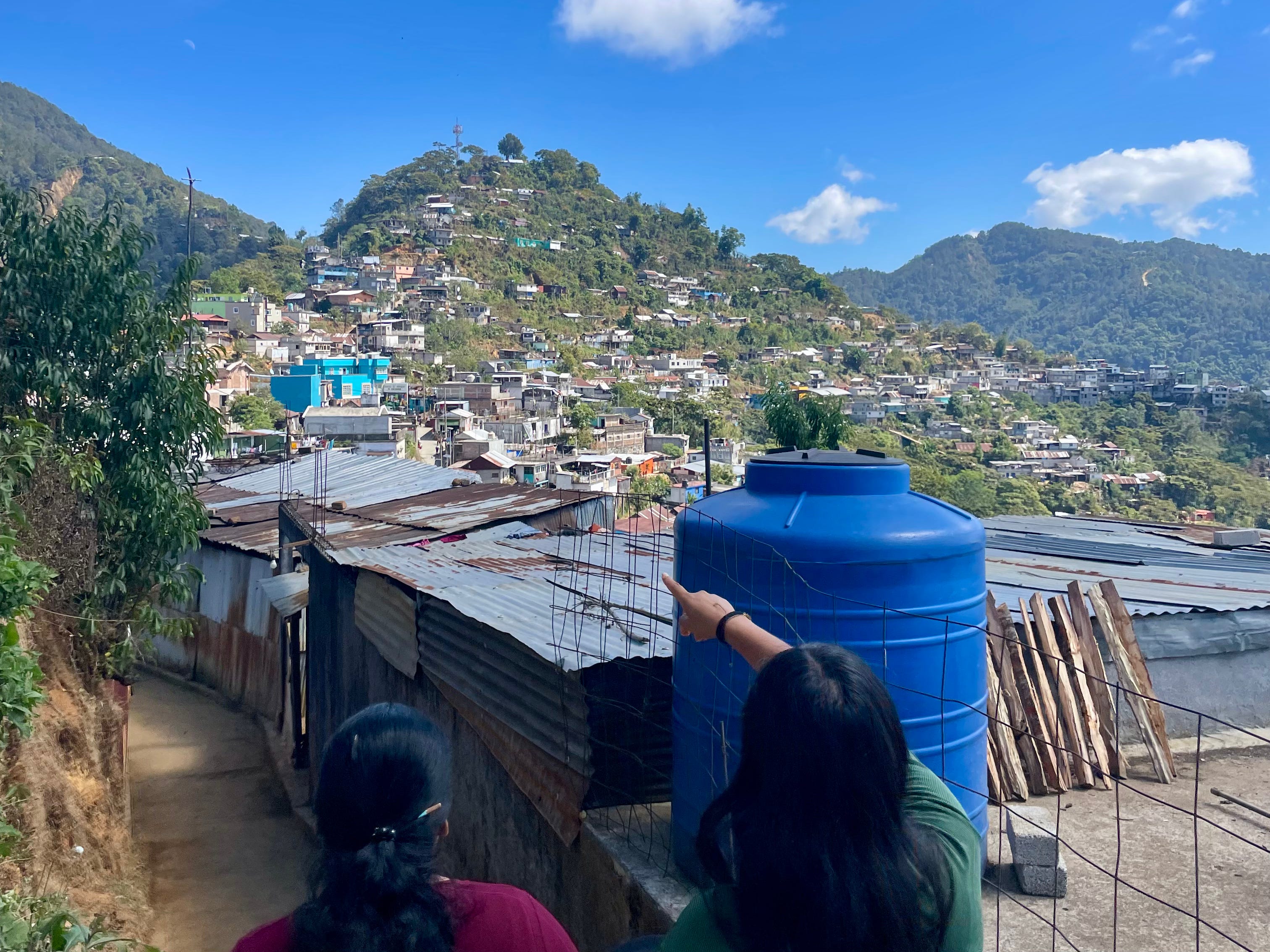
In the Sierra Sur, about four hours south of the capital city, no one said the word “origin.” In fact, the origin of coffee in their community is only half-preserved in oral history. They’ve worked with coffee plants their whole lives. So did their parents. So did their grandparents. At some point — no one seems sure exactly when — outsiders brought the plant to cultivate and export.
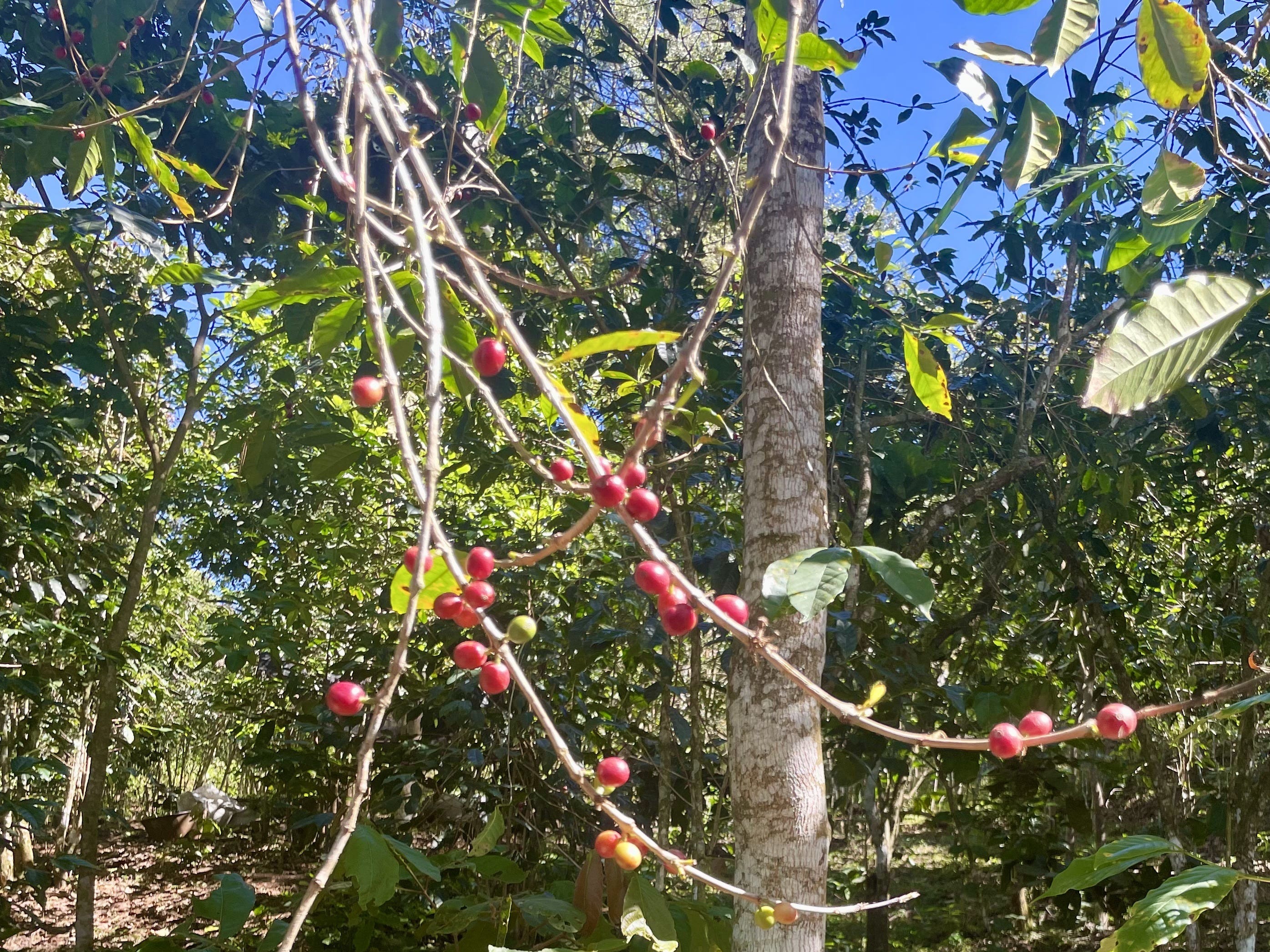
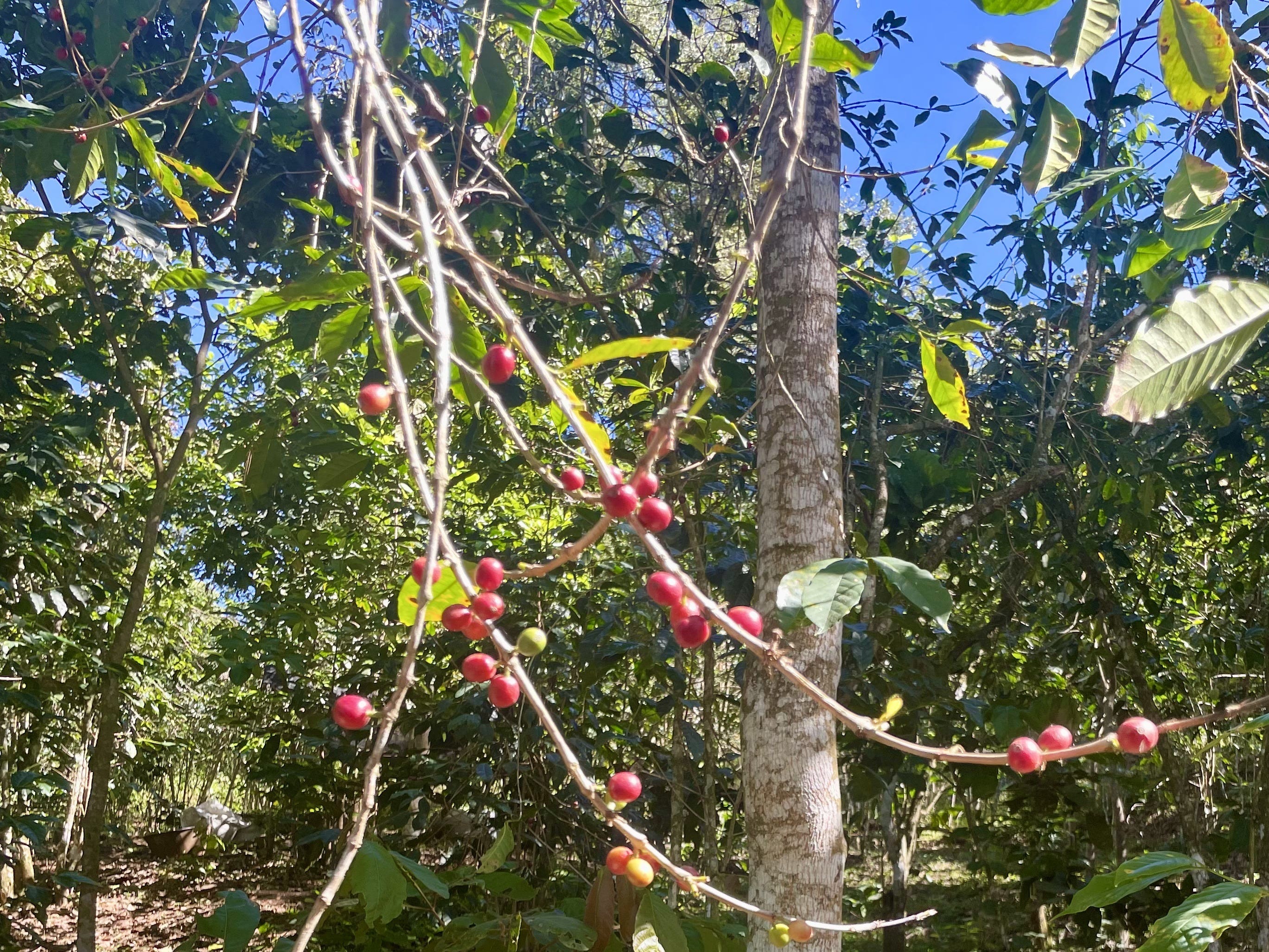
Walking down the main road of the pueblo, my friend pointed up and said, “Mira.” I looked around and saw a hand-painted sign in Zapoteco, the indigenous language, and a tall tree with white flowers. I said, “What? The flowers? They’re pretty.” She said “No, behind them.” Finally, I spotted them: ruby-red coffee cherries gleaming among the dark green foliage.
Our local host took a sharp left. Stepping over the curb, she led us off the concrete road and into the forest. We were walking through what the industry would call a “microlot,” but here the community calls it a “parcela.” I saw that they don’t farm rows and rows of coffee plants; they cultivate plots of land with coffee and corn and mangoes and other crops, where they also live with two or three generations of family.
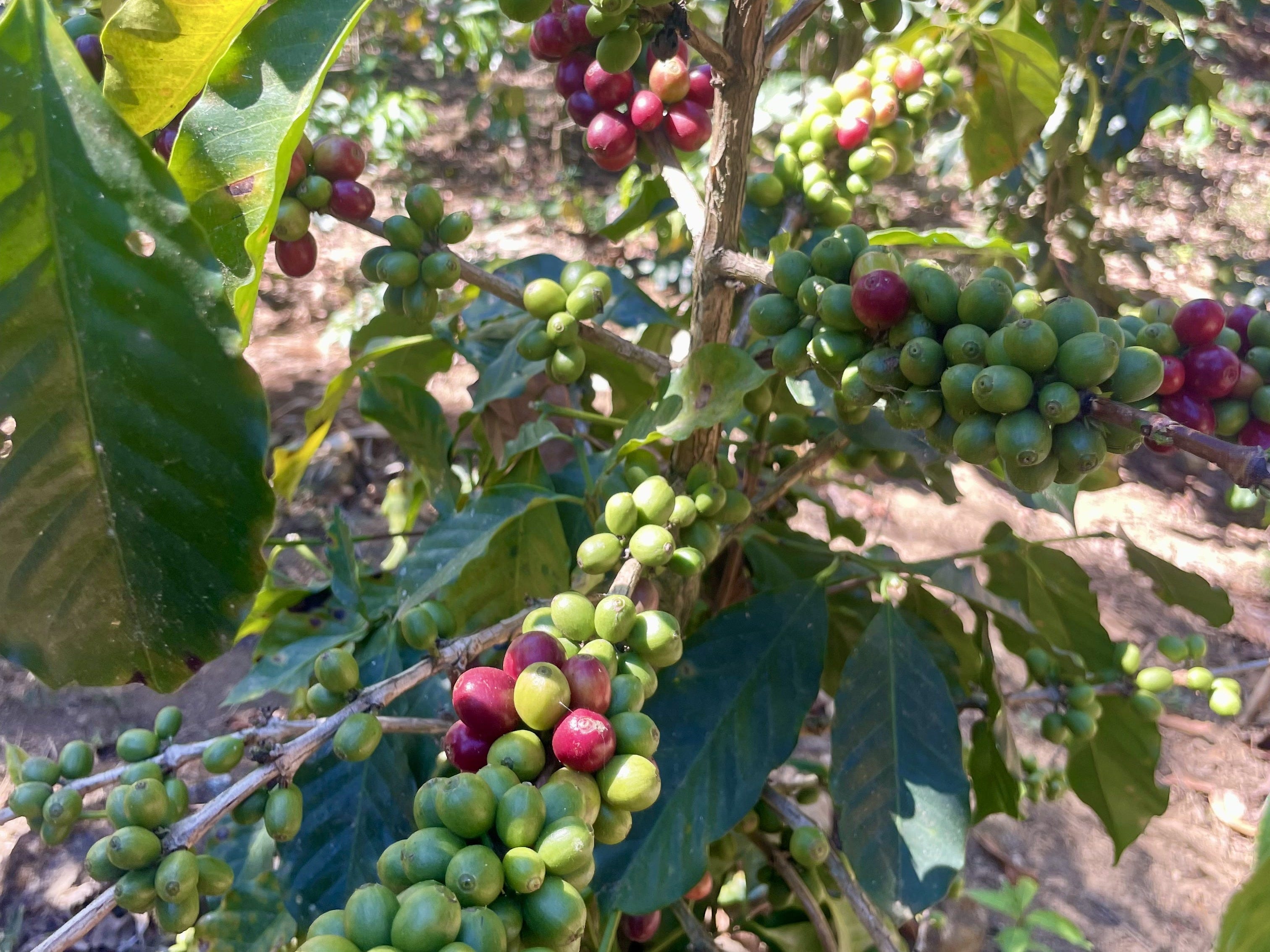
As we followed the path that had appeared, the foliage grew denser. I saw branches full of coffee cherries, in varying stages of ripeness. We greeted two women picking, piscando, into wicker baskets strapped across their bodies. This was the segunda vuelta, their second pass through the scattered coffee plants, picking the ripe cherries. There would be two or three more vueltas to finish out the harvest season.
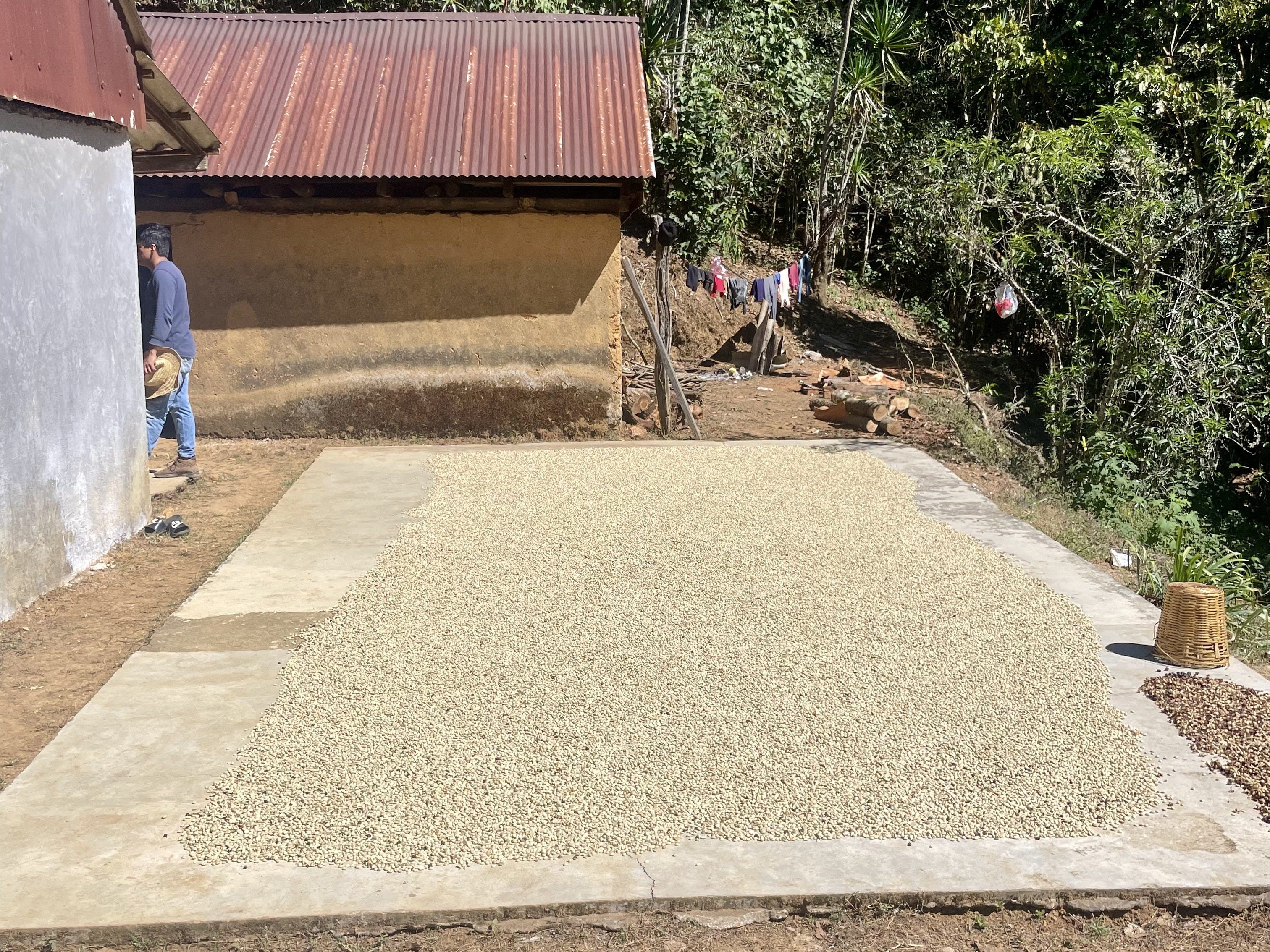
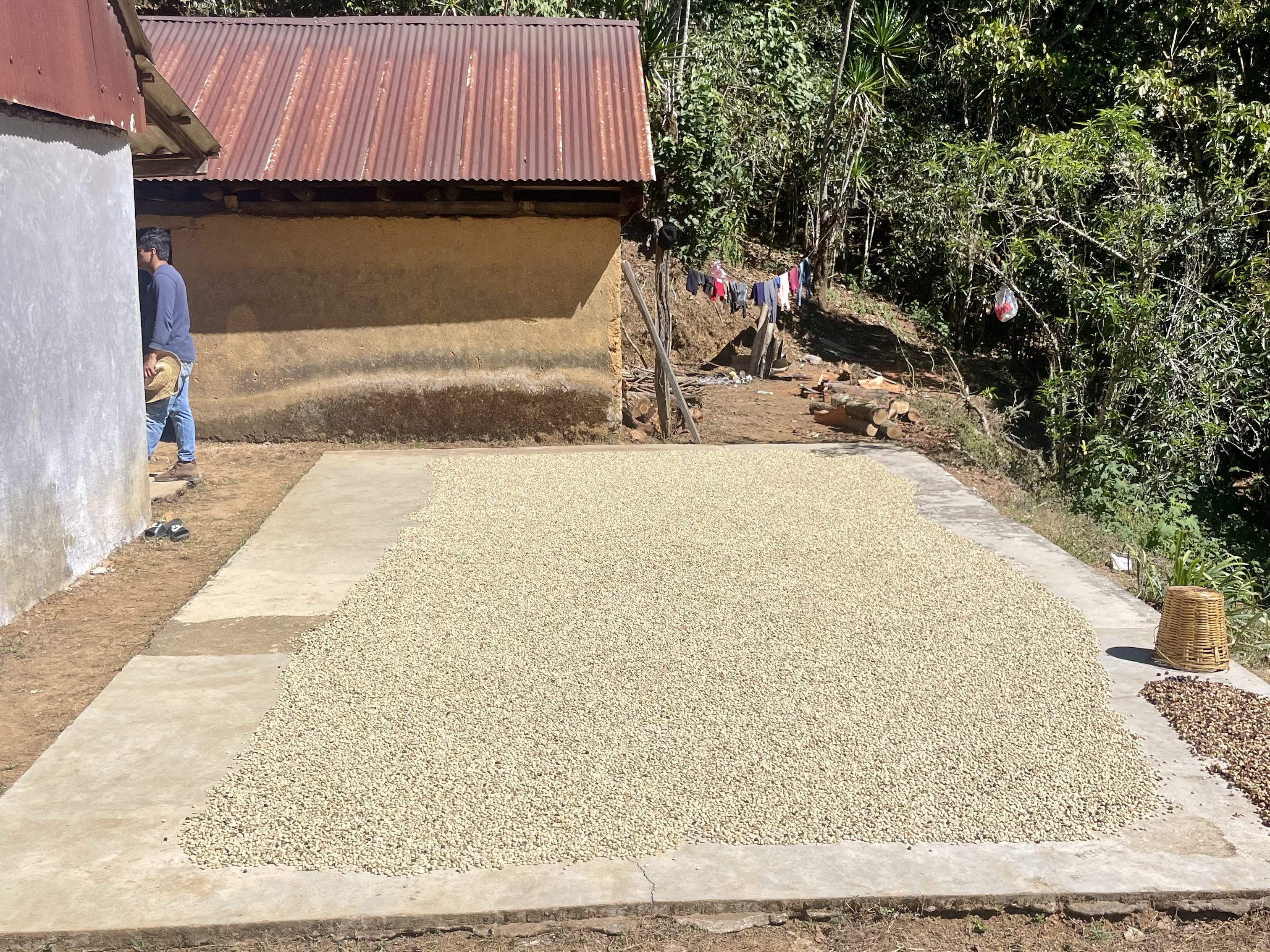
On a concrete patio where coffee was drying in the sun, next to the depulping machine, I saw plastic buckets heaping with coffee cherries, ready to be poured into tanks of water. If a cherry floated, it indicated a defect and was separated from the rest of the harvest. I looked around and saw a monstera plant, like the ones we put in terra cotta pots in trendy cafes, but this one — in its original form — was growing so tall I had to crane my neck.
We sat in the shade and our host spoke about “coyotes,” people who buy whole lots of coffee at low prices and resell them at a marked-up price. The growers accept the rotten deal because they need cash to pay the pickers. The hard part, she said, is finding a buyer de confianza. Someone they can trust.
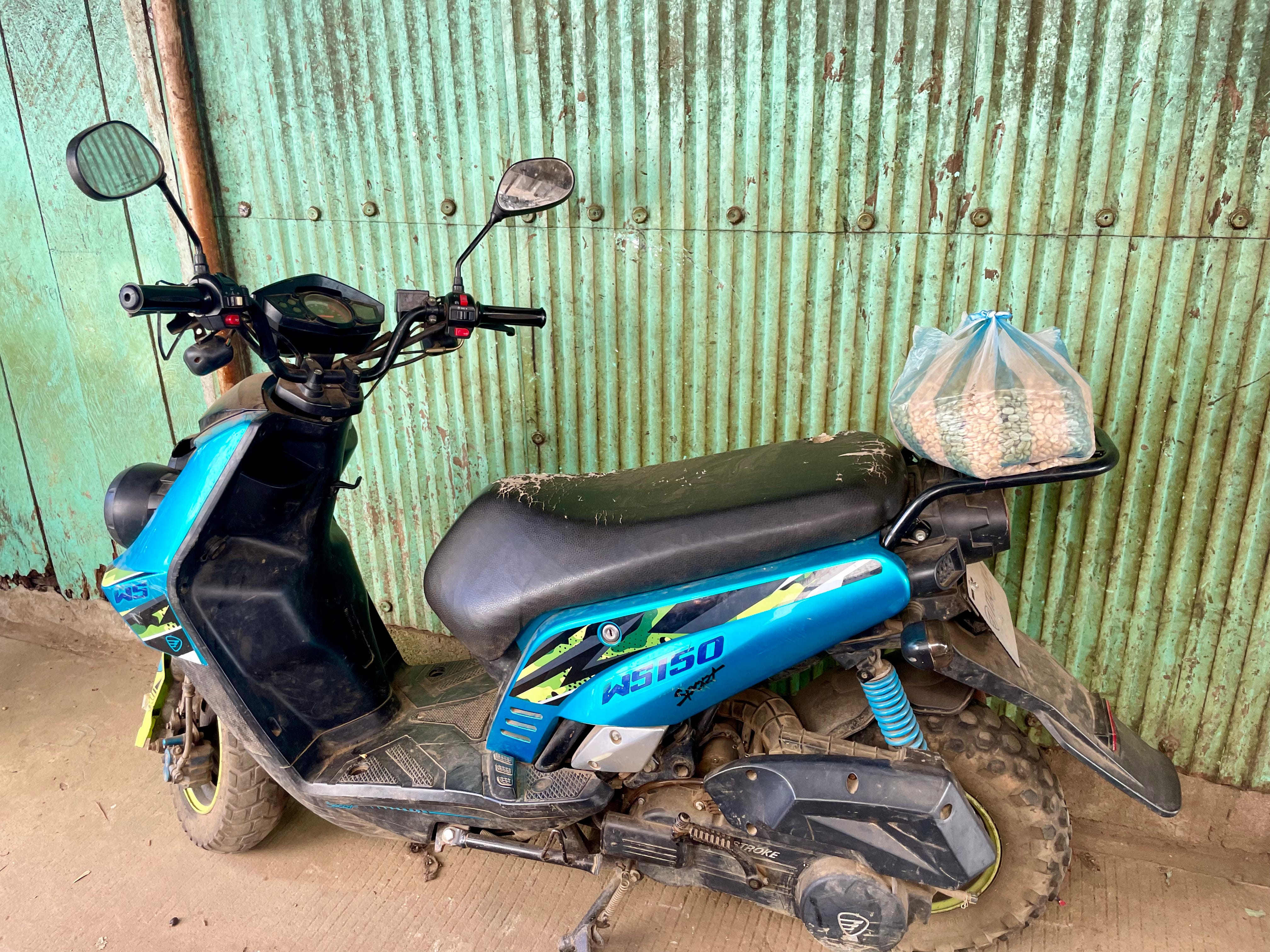
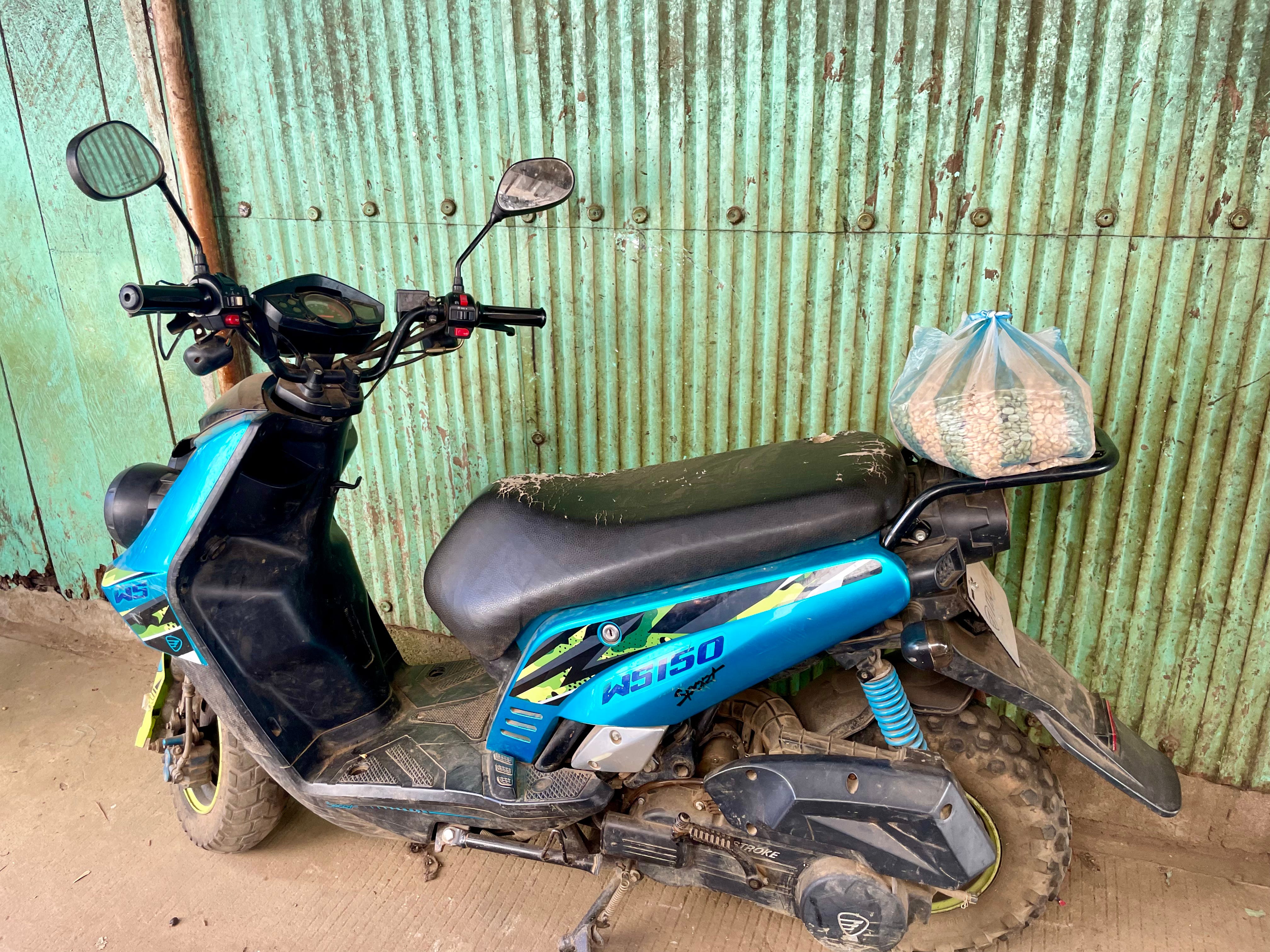
In this community, I saw coffee as a local, seasonal agricultural product. Sunday was their tianguis day, sort of like the farmers’ market, when everyone sets up tables on the main road near the church and sets out whatever they have to sell: onions, freshly baked bread, chicharrón, tamales. Small plastic bags of green, unroasted coffee.
Before visiting, I thought a “producer” was just a fancy term for a coffee farmer. But no: These are the people who coordinate the labor that goes into producing coffee beans. They tend the soil and plants, and pick and depulp and dry and hull and sell and, in some cases, export. In the industry, we refer to some coffee farmers as “smallholders.” What does that mean? Is the person small, or the thing they’re holding? What are they holding?
In places where coffee doesn’t grow, “origin” is mythical. But in Oaxaca, even in the city, you’re never far from it. “Origin” is the café owner’s pueblo. It’s where the barista’s grandparents live, where they grew up helping out in el campo, getting up at 5 a.m. and planting corn and beans and coffee. Lots of people know someone who has picked coffee, even on Christmas and Three Kings Day. They don’t say “in origin.” They say “en las comunidades” — in communities… that grow coffee.
Even saying “specialty coffee” in Spanish, with the people who actually grow it, seems silly. It feels like bringing the language of luxury into a landscape of labor.
At one point my friend asked me if it was anything like what I imagined. I said I hadn’t even bothered imagining what it would be like, because I had no clue. Now those words mean something else. I put names and faces and smells and tastes to the jargon.
In about eight months, someone halfway across the world will drink a pour-over made with coffee beans from the Sierra Sur de Oaxaca. And the person who grew those beans will wake up, drink café de olla made with the ones that floated — the cast-offs — and tend the plants that will produce next year’s harvest.
En el origen
Lo que aprendí al visitar a productores de café en Oaxaca
En el café de especialidad hablamos de “origen” como otras industrias hablan de terroir — como algo romántico, distante y comercializable.
El café se procesa “en origen”. Hacemos “viajes a origen”. Describimos el sabor según el origen: los cafés etíopes son afrutados y florales; los cafés mexicanos, achocolatados y con notas a nuez; los colombianos van del caramelo a los cítricos.
Recientemente tuve la oportunidad de “ir a origen” en Oaxaca durante la temporada de cosecha con una amiga, profesional local del café. En dos días, todos los términos de manual que había escuchado a lo largo de mis siete años aprendiendo sobre café de especialidad se volvieron tangibles — y empezaron a tener cada vez menos sentido.
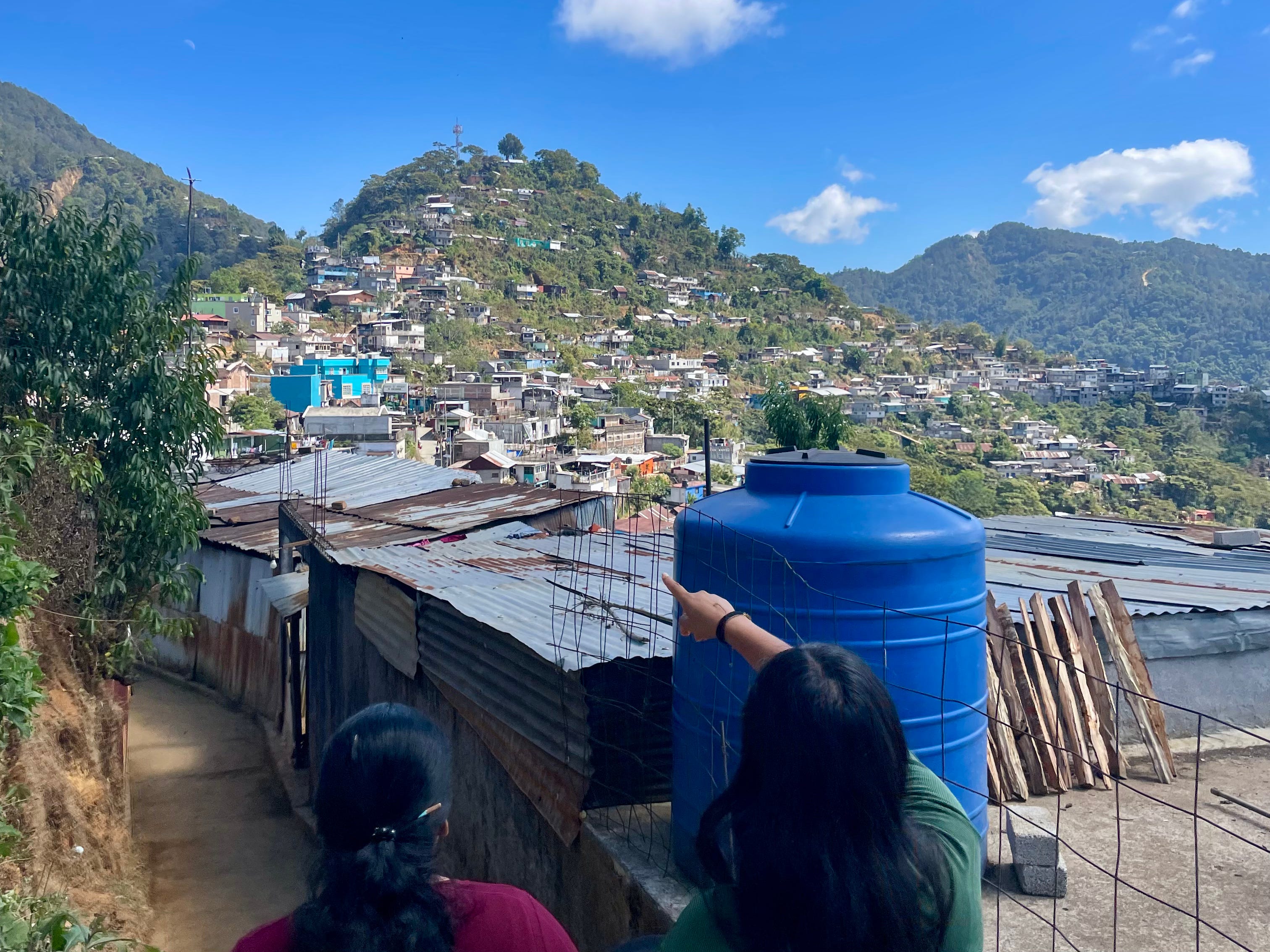
En la Sierra Sur, a unas cuatro horas al sur de la capital, nadie dijo la palabra “origen”. De hecho, el origen del café en su comunidad solo se conserva a medias en la historia oral. Han trabajado con plantas de café toda su vida. También sus padres. También sus abuelos. En algún momento — nadie sabe con certeza cuándo — personas de fuera trajeron la planta para cultivarla y exportarla.
Caminando por la calle principal del pueblo, mi amiga señaló hacia arriba y dijo: “Mira”. Miré alrededor y vi un letrero pintado a mano en zapoteco, la lengua indígena, y un árbol alto con flores blancas. Dije: “¿Qué? ¿Las flores? Están bonitas”. Ella respondió: “No, detrás”. Finalmente las vi: cerezas de café rojo rubí brillando entre el follaje verde oscuro.
Nuestra anfitriona local dio un giro brusco a la izquierda. Cruzando la banqueta, nos llevó fuera de la carretera de concreto y hacia el monte. Caminábamos por lo que la industria llamaría un “microlote”, pero aquí la comunidad lo llama “parcela”. Vi que no siembran hileras e hileras de cafetos; cultivan parcelas con café, maíz, mangos y otros cultivos, tierras donde también viven dos o tres generaciones de una misma familia.
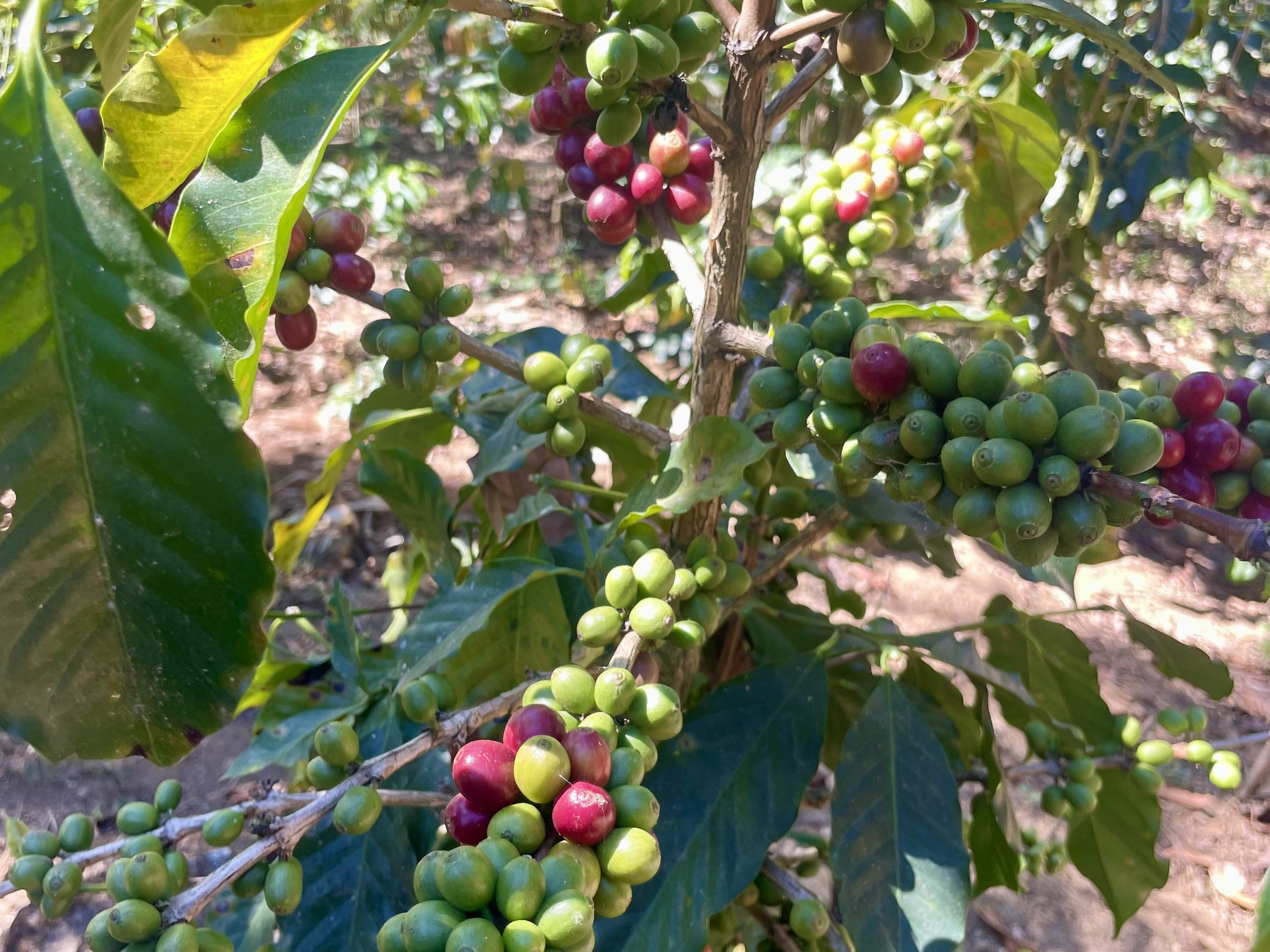
A medida que seguíamos el sendero que iba apareciendo, la vegetación se hacía más densa. Vi ramas llenas de cerezas de café en distintas etapas de maduración. Saludamos a dos mujeres que estaban piscando en canastas de mimbre sujetas a sus cuerpos. Era la segunda vuelta, su segundo recorrido por los cafetos dispersos para recoger las cerezas maduras. Habría dos o tres vueltas más antes de terminar la temporada de cosecha.
En un patio de concreto donde el café se secaba al sol, junto a la despulpadora, vi cubetas de plástico repletas de cerezas de café, listas para vaciarse en tanques de agua. Si una cereza flotaba, indicaba un defecto y se separaba del resto de la cosecha. Miré alrededor y vi una planta de monstera, como las que ponemos en macetas de terracota en cafeterías de moda, pero esta — en su forma original — crecía tan alta que tuve que alzar la vista para verla completa.
Nos sentamos a la sombra y nuestra anfitriona habló de los “coyotes”, personas que compran lotes enteros de café a precios bajos y los revenden a un precio más alto. Los productores aceptan el mal trato porque necesitan efectivo para pagar a los pizcadores. Lo difícil, dijo, es encontrar un comprador de confianza. Alguien en quien puedan confiar.
En esta comunidad, vi el café como un producto agrícola local y de temporada. El domingo era día de tianguis, algo así como el mercado local, cuando todos ponen mesas en la calle principal cerca de la iglesia y ofrecen lo que tienen para vender: cebollas, pan recién horneado, chicharrón, tamales. Pequeñas bolsas de plástico con café verde, sin tostar.
Antes de visitar, pensaba que “productor” era solo una forma elegante de decir caficultor. Pero no: son las personas que coordinan el trabajo que implica producir café. Cuidan la tierra y las plantas, y cosechan y despulpan y secan y trillan y venden y, en algunos casos, exportan. En la industria, nos referimos a algunos caficultores como “pequeños productores”. ¿Qué significa eso? ¿Qué tan pequeños son?
En los lugares donde no crece el café, el “origen” es algo mítico. Pero en Oaxaca, incluso en la ciudad, nunca estás lejos de él. El “origen” es el pueblo del dueño de la cafetería. Es donde viven los abuelos del barista, donde crecieron ayudando en el campo, levantándose a las cinco de la mañana para sembrar maíz, frijol y café. Mucha gente conoce a alguien que ha pizcado café, incluso en Navidad y el Día de Reyes. No dicen “en origen”. Dicen “en las comunidades” — en comunidades… que cultivan café.
Incluso decir “café de especialidad” en español, con las personas que realmente lo cultivan, suena absurdo. Se siente como llevar el lenguaje del lujo a un paisaje de trabajo.
En algún momento mi amiga me preguntó si era como lo había imaginado. Le dije que ni siquiera me había molestado en imaginarlo, porque no tenía idea de cómo sería. Ahora esas palabras significan otra cosa. Les puse nombres y rostros y olores y sabores a la jerga.
En unos ocho meses, alguien al otro lado del mundo preparará un pour-over con café de la Sierra Sur de Oaxaca. Y la persona que cultivó esos granos se despertará, beberá café de olla hecho con los que flotaron — los descartados — y cuidará las plantas que darán la cosecha del próximo año.
Beautifully explained and well said. Keep teaching us