On Strike
Inside the encampment, twenty years after the Oaxaca teachers' strike left scars

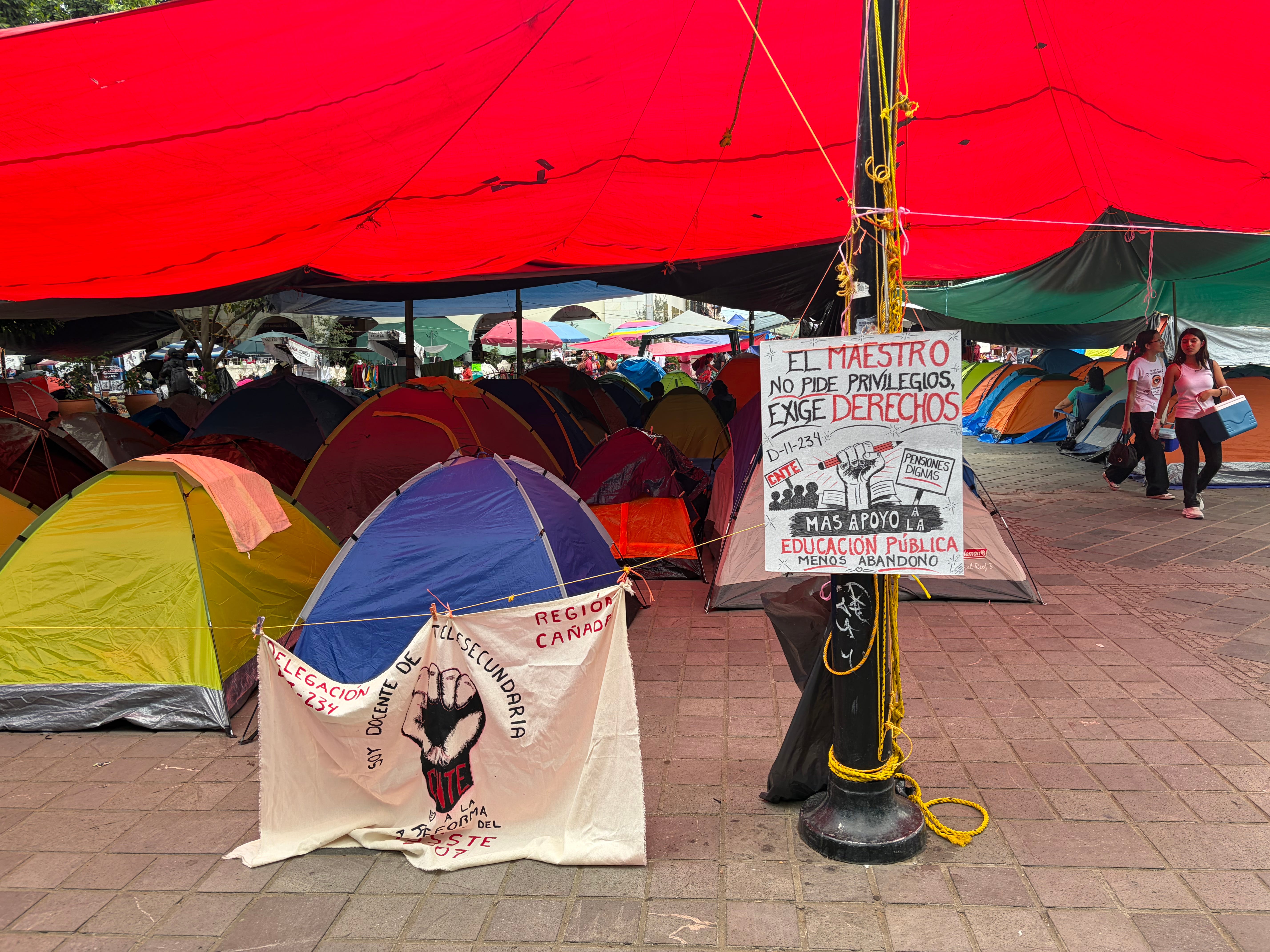
A little girl walking in downtown Oaxaca last week bumped into a rope tethered across the cobblestone street. It was supporting a tarp hung over camping tents that covered the road, and several blocks more.
Her stride cut short, the girl took a step back, regained her balance, and kept walking alongside a woman I presumed to be her mother. It wasn’t serious, and it wasn’t shocking, either. People have gotten used to ducking and weaving around the encampment of public school teachers on strike in what is normally the hub of tourist and government activity.
Around 80,000 teachers across the state of Oaxaca belonging to the National Coordinator of Education Workers (CNTE) began an indefinite strike last week, thousands camping in Oaxaca’s Historic Center.
They’ve left an estimated 800,000 public school students without classes, one month before the school year is slated to end. I asked a friend who has a school-aged son what he’s doing, then. “Well, he’s not going to school,” my friend said with a shrug. What can they do?
Having worked as an education beat reporter for local newspapers, I have a hard time fathoming this scope. I covered student walkouts and teacher union demands, but nothing that rose to this level — or that caused so many students to miss class for so long.
Thousands of the teachers from the Oaxaca union traveled to Mexico City to press demands on state and federal government. A friend of mine was one of them. He camped out for a week, then returned to Oaxaca for professional and personal reasons. But he would have rather stayed in Mexico protesting. “To defend my rights,” he said.
The teachers’ strike is annual, and this year marks the 20th anniversary of when things went sideways. People still reference the year 2006, the deadly social unrest, and the scars it left. It’s part of the fabric of Oaxaca. Now, the teachers are still calling for reform, and locals feel exasperated.
The union’s primary demand is improved benefits to their retirement and pension plans. A teacher and primary school director involved with the union explained to me that before, female teachers could retire after 28 years of service and males after 30. Their retirement funds used to be managed in a solidarity pension model. Now, teachers are only eligible for retirement and pensions after age 65, and pensions come from individual accounts managed by private funds.
They’re also calling for more vacation time, better pay, and better classroom conditions, especially in rural schools.
Some people say the teachers are asking for benefits that no public employee receives, or would expect to receive. My teacher friend said they’re making these demands for the benefit of all, not just teachers.
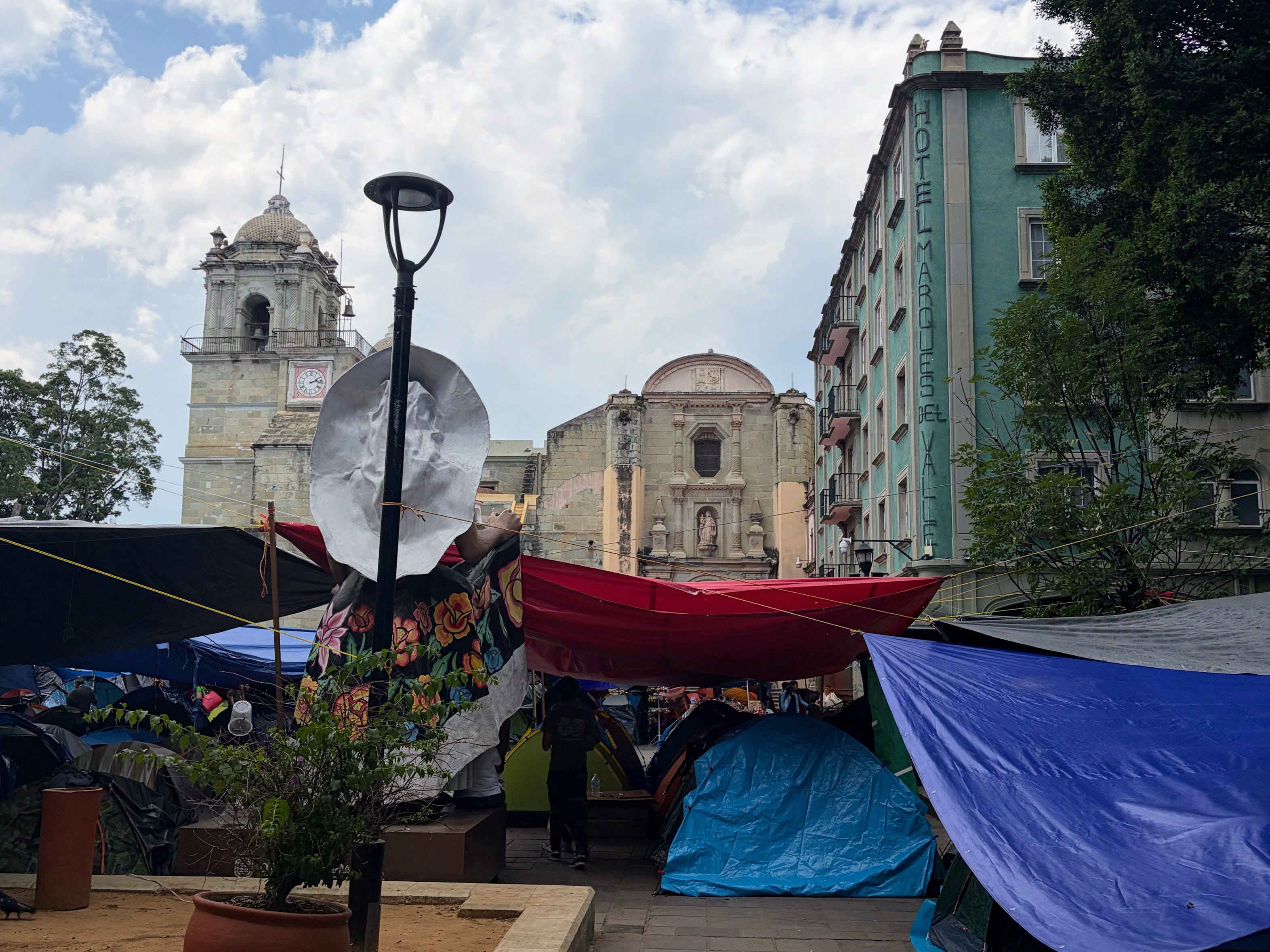
In the past week and a half, the strike has escalated. There was a standoff in a nearby village, with residents and authorities rejecting teachers’ occupation efforts. The teachers have also blockaded the airport and a major gasoline storage and distribution terminal.
I spoke with a rug weaver who travels twice a week from the village of Teotitlán del Valle into the city to sell his wares. With gas becoming scarcer, he said he’s going to need to conserve what he’s already got in the tank.
People are losing business at a time of year when tourism levels are at their lowest. Local storefronts are totally obstructed by encampments. Multiple guests at the bed and breakfast where I help out cancelled their trip when they saw what was going on.
But walking through the downtown plantón — occupation — the tone is tranquilo. Teachers sit in portable chairs, fanning themselves, talking to each other and on the phone. They come in shifts from across the state, setting up camp in sections with their other regional union members.
Vendors take advantage of the log jams to hawk clothes, jewelry, and hats; as well as tamales, tacos, elotes, empanadas, raspados, and jicaletas. Many display handwritten signs in support of the movement.
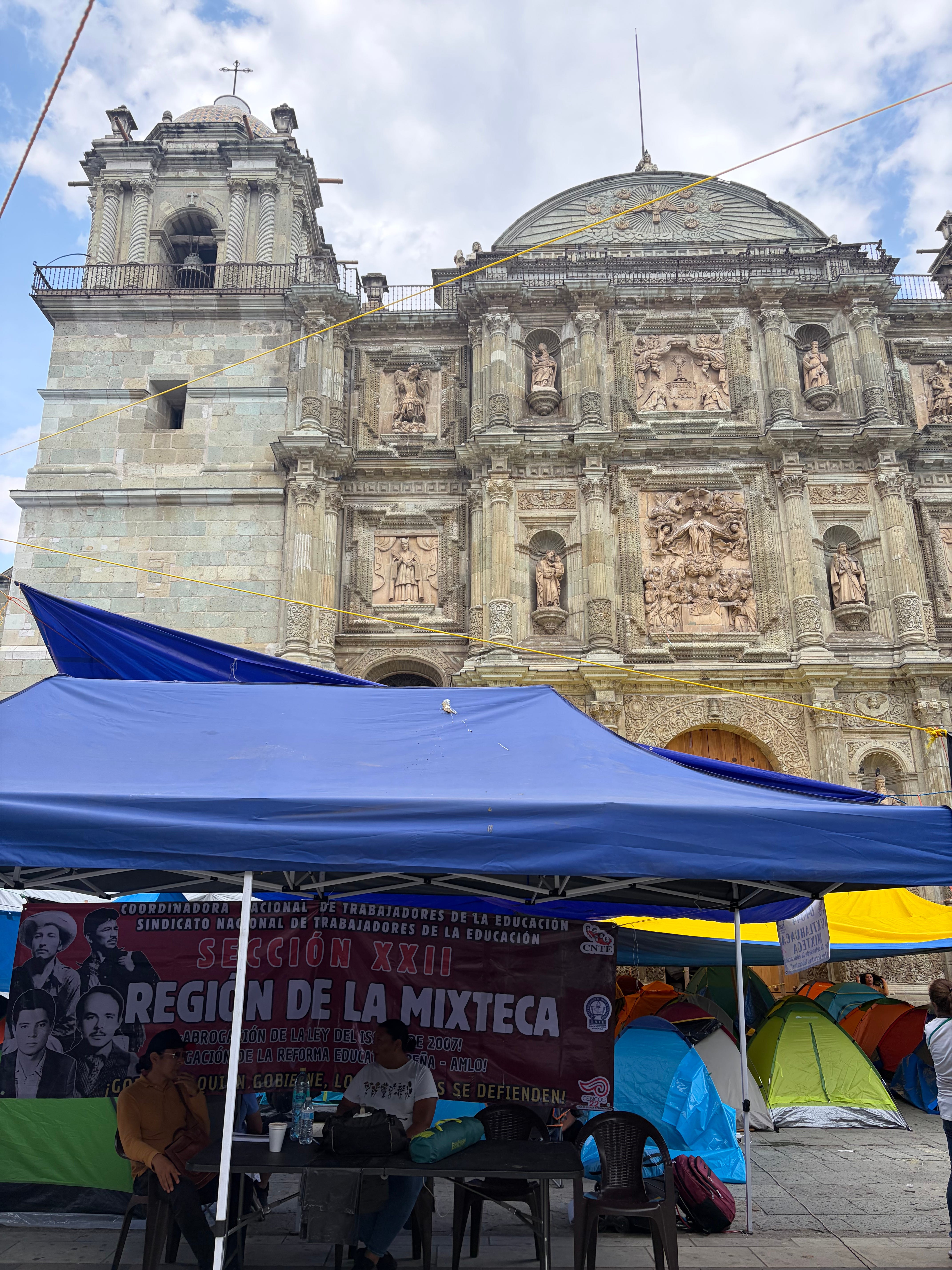
The strike started much the same in May 2006, people have told me, but things escalated when the government tried to break up the encampments with tear gas and batons. Other social organizations joined the teachers’ cause, and the occupation turned into a broader movement calling for the governor’s resignation. The standoff reached a boiling point in October, when two protestors and an independent journalist died during attacks by paramilitary groups allegedly sent by the government.
This year’s strike has only just begun. In the past, they’ve lasted for months. Vamos a ver what happens.
Boots. On. The. Ground. Reporting. 👏👏 such an important piece